
Planning network cabling for a Durham, NC office means balancing national standards with local permitting rules and the city’s own fiber infrastructure investments. The right cabling plan protects speed, scalability, and compliance from day one.
This article breaks down the standards that govern commercial installations, Durham’s specific permit requirements, and what businesses should verify before signing off on a cabling project.
Key Takeaways
- Commercial network installations in Durham should reference the current TIA-568 standard to ensure structured cabling compliance and future-proofing.
- Durham generally requires a permit for electrical wiring work, though some low-voltage signal cabling under 50 volts may qualify for an exception.
- The City of Durham has invested in municipal fiber-optic spurs and high-capacity DWDM infrastructure designed for 10G channels.
- A thorough site survey, pathway planning, and documentation review prevent costly rework after walls are closed and furniture is placed.
Why Structured Cabling Standards Matter for Durham Offices
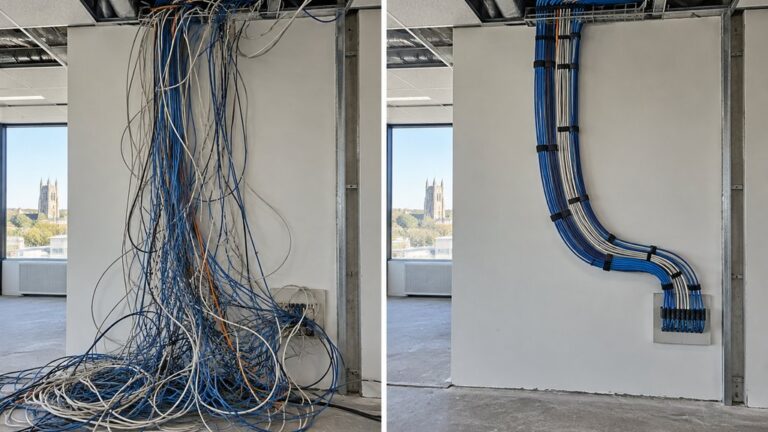
A disorganized cabling job creates more than an eyesore behind the rack. It leads to signal degradation, troubleshooting delays, and expensive rework when bandwidth needs outgrow the initial install.
The Telecommunications Industry Association publishes the TIA-568 commercial building telecommunications cabling standard, which governs everything from cable categories to maximum distances and testing requirements.
Durham offices that follow this standard gain a predictable infrastructure. Moves, adds, and changes become simpler.
Future upgrades to higher speeds require less demolition. The current edition, TIA-568-2024, reflects the latest performance criteria for copper and fiber systems.
Network Cabling Durham NC Planning Checklist
- ✓Reference standard for commercial cabling: TIA-568-2024
- ✓Permit generally required for electrical wiring: Yes
- ✓Low-voltage permit exception threshold: 50 volts between conductors
- ✓Municipal fiber infrastructure type: Fiber-optic spurs connecting designated facilities and city sites
- ✓City network backbone channel capacity: 10G channels via DWDM infrastructure
- ✓TIA standards accreditation body: ANSI-accredited standards development organization
All permit and infrastructure data reflects current Durham municipal sources. Verify specific project requirements with the City of Durham Development Services Center before construction begins.

What the TIA-568-2024 Standard Covers
The TIA-568-2024 standard defines the architecture for commercial premises cabling, including horizontal cabling, backbone cabling, work area outlets, and telecommunications rooms. It specifies performance parameters for Category 6A and higher copper cables, as well as singlemode and multimode optical fiber.
Compliance means more than buying the right cable. It requires proper bend radii, separation from electrical power sources, labeling schemes, and testing with certified equipment.
ANSI accredits TIA as the standards-development organization for this work, giving the standard weight in procurement contracts and warranty terms.
Durham Permit Requirements for Cabling Projects
Before any cabling contractor cuts into walls or installs conduit in Durham, the project may need a permit from the city. Durham’s development services generally require a permit for installing or altering electrical wiring, devices, or equipment.
However, Durham code recognizes an exception for certain low-voltage installations. Signal or intelligence wiring operating at no more than 50 volts between conductors may not require a permit.
This exception matters for data networks, access control, and some audio-visual runs, but the exact scope depends on the specific installation method and whether new penetrations or conduit are involved.
Municipal Fiber and Durham’s Network Backbone
Durham has not left fiber deployment entirely to private providers. The city’s broadband initiative includes engineering and construction of fiber-optic spurs connecting designated facilities and city sites.
This infrastructure creates potential interconnection points and redundancy options for businesses near those routes.
A City of Durham network specification also references dense wavelength division multiplexing infrastructure designed to carry 10G channels in its day-one configuration. For businesses evaluating carrier options or considering dark fiber leases, this public investment signals where high-capacity paths already exist.
Planning Your Office Cabling Installation
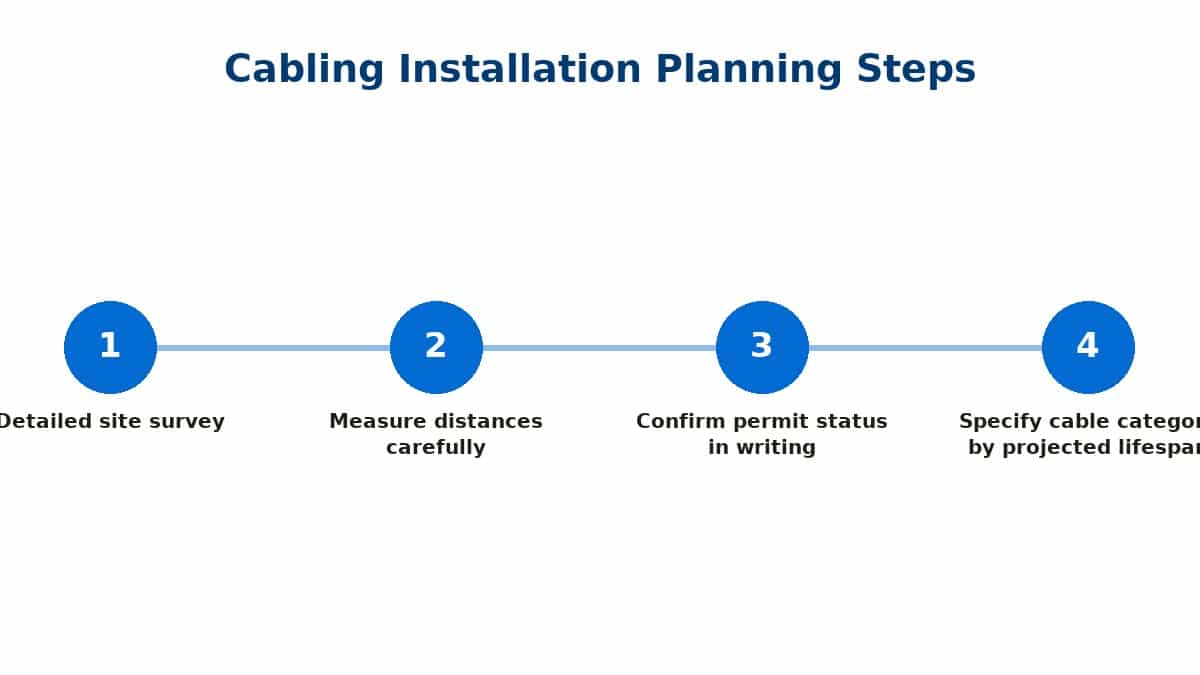
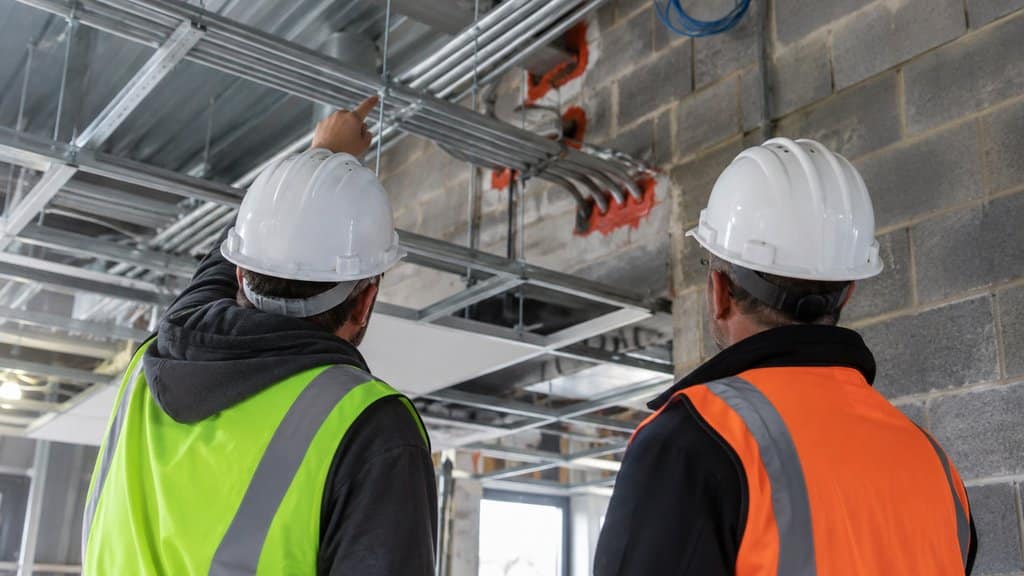
Start with a detailed site survey. Document existing pathways, ceiling types, fire-rated separations, and the locations of electrical panels and telecommunications rooms.
Measure distances carefully. TIA-568 limits horizontal copper runs to 90 meters of permanent link plus 10 meters of patch cord.
Next, confirm the permit status with your contractor. Ask whether the proposed scope triggers the general electrical permit requirement or falls under the low-voltage exception.
Obtain this in writing before work begins. Delays from an unpermitted installation can idle an office move-in for weeks.
Specify the cable category based on projected lifespan, not just today’s equipment. Category 6A supports 10 Gigabit Ethernet to 100 meters.
Singlemode fiber supports far higher speeds and longer distances for backbone or campus links. Label every cable at both ends.
Test 100 percent of installed links and retain the reports.
How RCOR Supports Network Infrastructure Planning
RCOR has served Raleigh and Durham businesses since 1992, specializing in enterprise-class network support for organizations with small-company IT budgets. The company’s network engineering services include infrastructure assessment, design review, and project coordination for office moves and expansions.
RCOR’s Assurance Plan provides predictable flat-rate coverage that maximizes computer and network availability. The plan includes 24/7 monitoring, rapid remote help-desk response, and on-site service availability when physical work is required.
For cabling projects, RCOR can review contractor proposals against TIA-568 requirements, verify documentation, and integrate the new infrastructure into ongoing managed IT services.
If that response time is missed, the work is free. The firm also offers two flat-rate plans: one with unlimited remote support plus eight hours of on-site service per month, and a traditional all-inclusive option.
Both plans align with the predictable budgeting that Durham businesses need when investing in infrastructure upgrades.
Future-Proofing Cable Runs for Growing Durham Workforces
Durham’s tech sector continues to expand, and office networks must accommodate headcount growth without complete rewiring. Installing additional conduit and pull strings during initial deployment protects against disruptive retrofit projects later.
Smart future-proofing means running 25 to 50 percent more cables than current workstation counts require. These spare drops sit terminated in telecommunications rooms, ready for rapid activation when new hires arrive or departments reorganize.
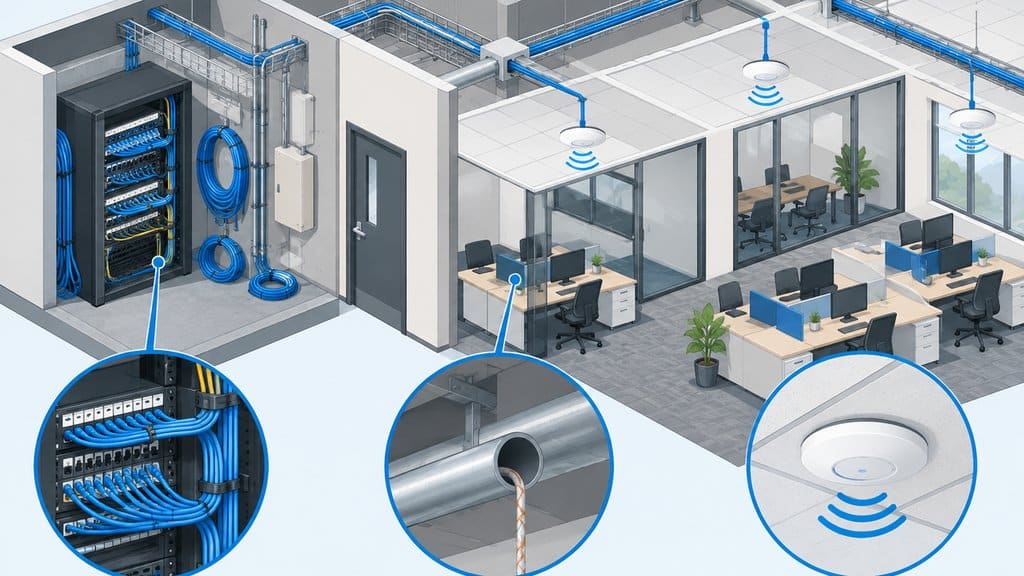
Ceiling pathways deserve equal attention, with dedicated runs for wireless access points placed every 2,500 to 3,000 square feet. This density supports current Wi-Fi 6E standards and positions offices for Wi-Fi 7 deployment without ladder work interrupting business hours.
RCOR recommends labeling every spare cable clearly and documenting its exact route in as-built drawings. Maintenance teams can then identify available capacity instantly rather than tracing lines through crowded overhead trays.
Fiber optic strands should accompany copper runs to conference rooms and collaboration spaces even where not immediately needed. Display technologies, video conferencing systems, and 8K presentation equipment increasingly demand bandwidth that copper cannot sustain.
Consider modular furniture zones when planning outlet placement. Workstations in Durham’s flexible offices shift frequently, so floor boxes and poke-through devices maintain connectivity without structural modifications.
Environmental controls in telecommunications rooms directly affect cable longevity. Proper ventilation prevents heat buildup around bundled cables, preserving signal integrity and keeping jacket materials from premature degradation.
Testing and Certification Protocols for Durham Installations
Every cable installed in a Durham office requires comprehensive testing beyond simple continuity verification. RCOR performs full channel testing using calibrated certification analyzers that measure insertion loss, near-end crosstalk, and return loss against TIA-568-2024 thresholds.
Test results generate permanent electronic records traceable to individual cable identifiers. These reports become critical assets during warranty claims, troubleshooting sessions, and property transactions where network infrastructure value matters.
Alien crosstalk testing gains importance in Category 6A and above deployments common in Durham’s high-density environments. Bundled cables in shared pathways can induce interference invisible to basic testers, degrading 10-gigabit performance without obvious symptoms.
Fiber optic links demand separate verification protocols including optical time-domain reflectometer analysis. OTDR traces reveal bend radius violations, connector imperfections, and splice quality issues that power meter testing alone cannot detect.
RCOR maintains current calibration certificates for all test equipment and replaces measurement devices according to manufacturer schedules. Outdated or uncalibrated tools produce unreliable data that invalidates warranty coverage from cable manufacturers.
Testing occurs in two phases: after rough-in completion but before ceiling closure, and again following final termination and cleanup. This dual approach catches installation damage early while confirming finished work meets specification.
Clients receive organized electronic deliverables with hyperlinked test results sorted by telecommunications room and outlet identifier. This structure simplifies future moves, adds, and changes by establishing exact baseline performance for every installed link.
Coordinating Cabling with Durham’s Construction and Renovation Cycles
Network cabling in Durham offices succeeds or fails based on construction phase coordination. RCOR engages during early design development to influence pathway routing, electrical separation, and firestopping requirements before walls close.
Rough-in windows in commercial construction remain brief, often measured in days between structural completion and drywall installation. Missing this interval forces surface-mounted raceways or costly access panel installations that compromise aesthetics.
Tenant improvement projects in Durham’s repurposed tobacco warehouses and mill buildings present unique constraints. Historic structure modifications require additional approvals, and existing masonry walls resist standard cable routing without specialized tooling.
Flooring contractors, painters, and finish carpenters can damage exposed cables if sequencing proceeds incorrectly. RCOR establishes clear protection protocols and milestone-based inspection points to verify cable integrity before subsequent trades access work areas.
Commissioning schedules must account for final testing, documentation, and client training. Rushing these closing activities to meet arbitrary occupancy dates produces incomplete deliverables and frustrated end users discovering problems after vendor crews depart.
Seasonal factors affect Durham construction timelines, with summer humidity potentially impacting cable pulling lubricants and winter temperature swings affecting expansion loop requirements. RCOR adjusts installation techniques to local climate conditions throughout the project calendar.
Post-occupancy support agreements ensure responsive resolution of issues emerging after staff begin using new infrastructure. These arrangements supplement manufacturer warranties with local expertise familiar with the specific installation and client operational priorities.
Frequently Asked Questions
Does every network cabling project in Durham need a permit?
Durham generally requires a permit for electrical wiring work. Some low-voltage signal cabling operating at no more than 50 volts between conductors may not need a permit, but the exact determination depends on installation methods and scope.
Always confirm with the city or your contractor before starting work.
What cable category should a new Durham office install?
Category 6A copper cable is the practical minimum for new commercial installations. It supports 10 Gigabit Ethernet to the full 100-meter distance and provides headroom for future equipment upgrades without recabling.
How does municipal fiber in Durham affect private office networks?
The city’s fiber-optic spurs and high-capacity backbone create interconnection opportunities near designated facilities. Businesses evaluating carrier services or dark fiber can use this public infrastructure as a reference point for where robust connectivity already exists.
What documentation should I receive after a cabling installation?
You should receive test reports for every installed link, as-built drawings showing cable routes and labels, and a warranty from the installer. This documentation proves compliance with TIA-568 and simplifies future moves, adds, and changes.
Can RCOR manage a cabling project from design through cutover?
RCOR provides network engineering services and infrastructure planning as part of its IT consulting and solutions. The team can review designs, coordinate with cabling contractors, verify testing documentation, and integrate the completed network into ongoing managed IT services.
How far in advance should Durham offices schedule structured cabling with RCOR?
Engaging RCOR during lease negotiation or schematic design provides optimal outcomes, allowing infrastructure planning to influence space layout and construction budgets. For existing occupied spaces, six to eight weeks of lead time supports proper assessment, material procurement, and coordination with building management and other trades.
Sources

About the author
Tim Richter - Co-Founder / President
Tim Richter is Co-Founder and President of RCOR, a managed IT and cybersecurity firm that has been serving businesses across Raleigh and Durham since 1992. He brings more than 35 years in the IT industry and today leads a team providing enterprise-class network support to small and mid-sized organizations throughout the Research Triangle.